
About
I'm Rachel Brown — and I help healthcare practices work better.
I work with independent healthcare and wellbeing practices that have reached the point where running the business is taking up far too much of the owner's time.
Sometimes that means taking day-to-day administration and practice management off their plate.
Sometimes it's improving the systems and processes that have evolved as the practice has grown.
And sometimes it's stepping in at a more operational level to bring structure, oversight and accountability to the business.
That's why Done Virtually isn't simply about providing extra admin support.
It's about making the practice easier to run.
Book a Practice Discovery Call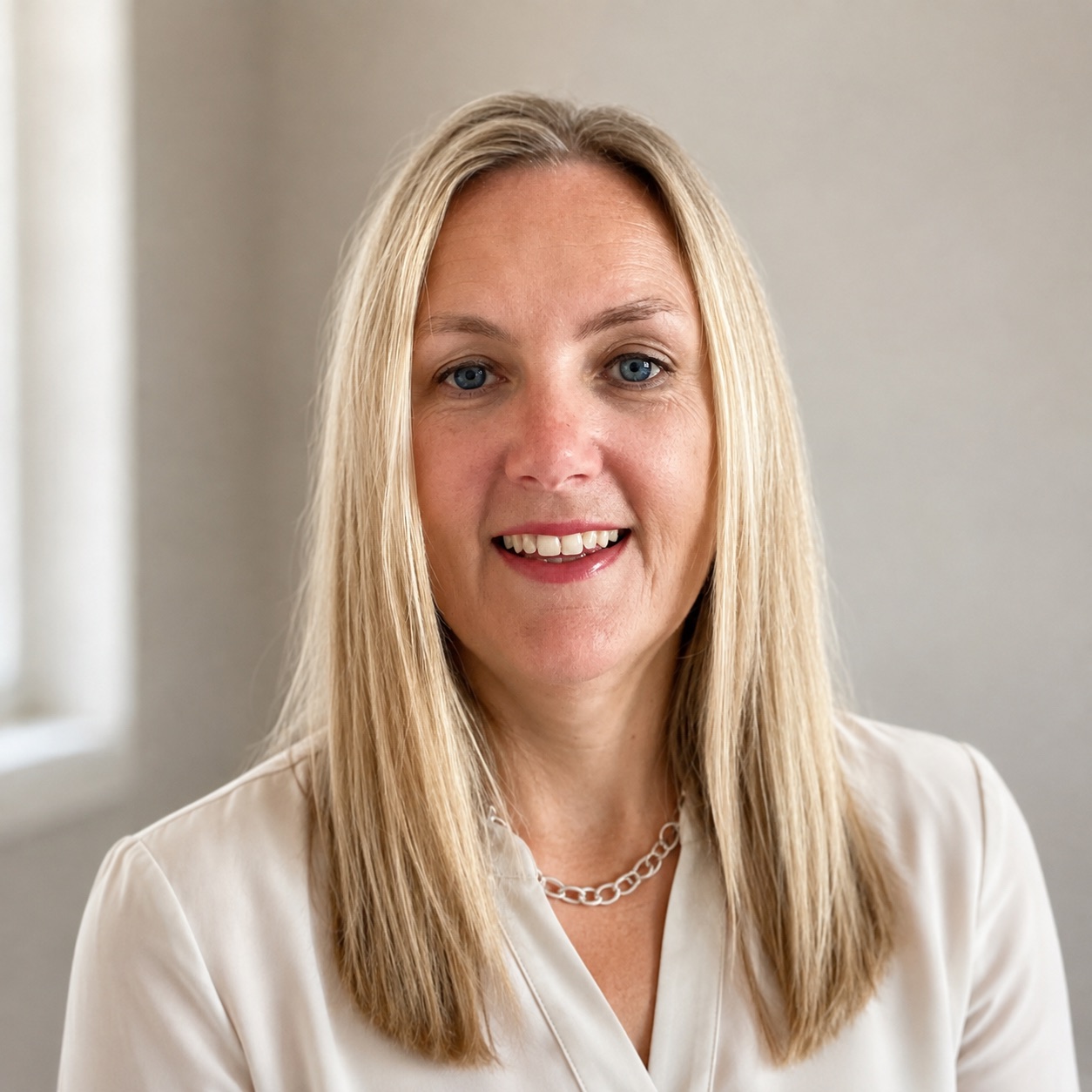
The route here
From corporate operations to independent healthcare
Before starting Done Virtually, I spent more than 20 years working across customer service, IT service delivery, operations, process improvement and business management.
My career took me from customer service and training roles through to senior operational management and ultimately a Board Director position with Pertemps Network Group.
At Director level, I was responsible for ICT and Customer Support Operations supporting around 1,800 users.
But the part of that experience that's most relevant to the healthcare practices I work with today isn't the job title or the size of the organisation.
It's learning how to make complicated operations work better.
Throughout my career I've looked at where things get stuck, why problems keep recurring, where time and money are being wasted and what needs to change to make an organisation run more effectively.
I've designed processes, implemented systems, managed teams, improved customer journeys, introduced performance measures and built operational structures that enable organisations to deliver consistently and grow.
Today I apply that same thinking to independent healthcare practices.
The scale may be different. The principles aren't.
Track record
I've spent my career fixing the things that don't work
Earlier in my career, I managed the IT support operation for British Airways and Virgin Atlantic across UK airports, leading a support team of more than 50 people and coordinating around 125 field engineers.
In an airport environment, inefficient processes aren't simply inconvenient.
If a check-in kiosk, ticket machine or printer fails, it needs resolving quickly. A priority incident could require a response within 10 minutes and resolution within an hour, with the wider objective of preventing an IT issue contributing to an aircraft delay.
We introduced more proactive maintenance, ITIL-based ways of working and practical changes such as improving where equipment and replacement parts were located so engineers could resolve problems faster.
Later, at Pertemps Network Group
Over more than a decade I progressed from Customer Service Manager to Operations Manager and ultimately Director. Improvements I led or implemented contributed to:
- SLA performance improving from below 50% to consistently above 98%
- first-time fix performance increasing to over 80%
- mobile expenditure reducing by more than 25% within 12 months
- the introduction of self-service and 24/7 support
- better project management, procurement and operational processes
99.6%
SLA performance in aviation IT support
42%
increase in productivity
98%+
SLA performance achieved at Pertemps
25%+
reduction in mobile expenditure within 12 months
Different organisations. Different problems.
But the approach has always been the same:
Understand what's actually causing the problem. Fix the process behind it. Put the right system and structure in place. And make sure the improvement works in the real world.
Why it transfers
Why that matters in a healthcare practice
A five-person healthcare practice clearly doesn't need the same operational structure as a national organisation or an airport IT operation.
But growing practices experience many of the same underlying problems.
- Processes that worked when there were two clinicians don't work quite so well when there are six.
- The owner becomes the person everyone asks when they don't know what to do.
- Administration builds up.
- Different team members start doing the same task in different ways.
- Information sits in people's heads rather than in a process.
- The practice management system is being used, but perhaps only a fraction of what it can actually do.
- Patients have an inconsistent experience depending on who deals with them.
- And the owner spends more and more time keeping everything moving.
That's where my corporate experience becomes useful in a smaller practice.
I don't arrive with layers of corporate bureaucracy or processes for the sake of processes.
I take the principles that work — clear responsibilities, sensible systems, consistent processes, useful measures and good customer service — and apply them in a way that's proportionate to the practice.
Sometimes the answer is a very simple change.
Sometimes it requires rebuilding a process.
And sometimes the practice has grown to the point where it needs someone to take ongoing responsibility for how the operation works.
Sector experience
Healthcare isn't just a sector I've chosen to market to
Since establishing Done Virtually in 2020, I've supported more than 30 businesses, with healthcare becoming a significant part of my work.
My involvement has ranged from setting up the systems behind a new private practice to improving patient journeys, rebuilding workflows and managing the ongoing day-to-day operation of established practices.
I've worked extensively with WriteUpp and Cliniko across more than 10 healthcare practices, including initial implementation, new clinic setup, workflow redesign, online booking, forms, automated communications, patient administration and ongoing practice management.
That breadth matters.
I understand that the software is only one part of running a good practice.
The system has to support the way the practice actually works.
Practices and practitioners I've worked with
- Physiotherapy
- Psychology and child psychology
- Women's health and menopause
- Private medicine
- Trichology
- Speech and language therapy
- Specialist healthcare services
- Multi-site practices
In practice
From filing cabinets to a practice built for growth
One private menopause practice I began supporting was managing much of its patient administration using Word documents that were printed and securely stored in filing cabinets.
It had worked when the practice was smaller.
But it wasn't an efficient or scalable way to operate as the business began to grow.
Before
- Word documents
- Paper records
- Filing cabinets
- Manual processes
- Limited scalability
What changed
- WriteUpp implemented
- Digital workflows
- Online booking
- Streamlined patient administration
- Improved practice management
Outcome
A more scalable practice with the operational foundations to expand services and work with larger organisations.
I redesigned the way the practice worked and implemented WriteUpp as its practice management system, introducing digital workflows, online booking and more streamlined processes for managing patients and the day-to-day operation of the practice.
But the objective wasn't simply to replace paper with software.
It was to put the operational foundations behind the business so it could grow without creating more administration and complexity for the owner.
That's what practice improvement means to me.
Technology is part of the solution, but the real value comes from designing the processes around it so that the practice becomes easier to run and has the capacity to grow.
Built around the practice
Support that grows with your practice
One of the reasons I've structured Done Virtually the way I have is that not every practice needs the same level of support.
And what you need today may be very different from what you need twelve months from now.
Practice Support
When you need reliable help with the day-to-day administration and practice management that's taking time away from you and your patients.
Practice Improvement
When something isn't working as well as it should and you need help improving the systems, workflows, patient journey or processes behind the practice.
This can be anything from a focused Practice Systems Power Session to a larger improvement project.
Practice Operations
When the practice has grown to the point where you need more than additional admin — you need someone to bring operational structure, oversight and accountability and help make sure things actually get done.
You don't have to fit yourself into a package.
We start with what the practice actually needs.
How I work
Practical, hands-on support
I'm not someone who wants to spend weeks producing a beautiful report telling you everything that's wrong and then leave you to sort it out.
My approach is practical.
- I'll ask questions.
- I'll look at what's actually happening rather than what everyone thinks is happening.
- I'll challenge things that don't make sense.
- I'll work out where the bottlenecks and unnecessary work are.
- And then I'll help put the improvements in place.
That might mean configuring WriteUpp or Cliniko, redesigning a patient workflow, documenting a process, improving reporting, introducing clearer responsibilities, setting up a new service or helping manage the operation on an ongoing basis.
I don't just tell you what needs changing. I help make the change happen.
Qualifications and recognition
Experience backed by professional standards
My approach combines hands-on experience with professional training and more than two decades working in structured operational environments.
My professional qualifications, accreditations and recognition include:
- Certified Online Business Manager (OBM®) — IAOBM
- ITIL V3 Foundation
- Investors in Excellence Assessor
- Service Desk Institute — Service Superhero Award, the annual award recognising the best-performing service desk leader
I've also worked extensively with quality and management standards including ISO 9001, ISO 14001 and ISO 27001, designing, implementing and auditing the systems and processes organisations need to meet those standards.
I've helped businesses build complete management systems from the ground up and achieve ISO certification — not because I believe every small business needs lots of documentation, but because I understand how to turn requirements into processes that people can actually use.
Who you work with
The right support around your practice
Done Virtually is led by me, Rachel Brown, and I personally oversee our client relationships and the operational and improvement work we deliver.
That means you get the benefit of my experience, understanding of your practice and oversight of the bigger picture — rather than your support simply becoming a disconnected list of tasks.
For some day-to-day Practice Support, a member of the Done Virtually team may work alongside me to provide the administrative support your practice needs, always under my direction and oversight.
For Practice Improvement, systems work and higher-level Practice Operations, I remain closely involved and lead the work.
This approach means we can give practices the right level of support without losing the personal involvement, operational thinking and continuity that are so important to the way I work.
You get the right support for the work that needs doing.
Away from the practice
And when I'm not working…
I'm based near Worcester and outside work you'll usually find me spending time with my family — often on the sidelines watching my son play rugby or cricket, swimming or, more recently, scuba diving.
I'm a Worcester Warriors supporter, enjoy getting out into the countryside for a walk, travelling and spending time with friends. I'm also quite happy building Lego when given the opportunity — and I have a perhaps slightly unhealthy appreciation for shoes and shopping.
For me, having a business that works around life rather than taking it over is important.
And that's something I want for the practice owners I work with too.
Free 30-minute Practice Discovery Call
Your practice doesn't need more complexity. It needs the right support.
Whether you need help getting the day-to-day under control, improving a particular system or process, or taking some of the operational responsibility off your shoulders, we can start with where your practice is now.
The first conversation is simply about understanding what's happening, what's getting in the way and whether I'm the right person to help.
Not ready for a wider project?
If there's one particular system or process that's causing frustration, the Practice Systems Power Session gives you two focused hours to work on it together for a fixed fee of £195.
Find out about the Practice Systems Power Session